Marrakech (or Marrakesh, both spellings are used) is one of the best street-food cities in North Africa, and a surprising amount of it is plant-based. Below is what we eat ourselves when we walk through the souks, and the questions to ask so a vegan snack stays vegan. We are Dounia and Hassane, a Marrakech family who cook fully plant-based Moroccan food every day.
Vegan street food to try in Marrakech
Bissara
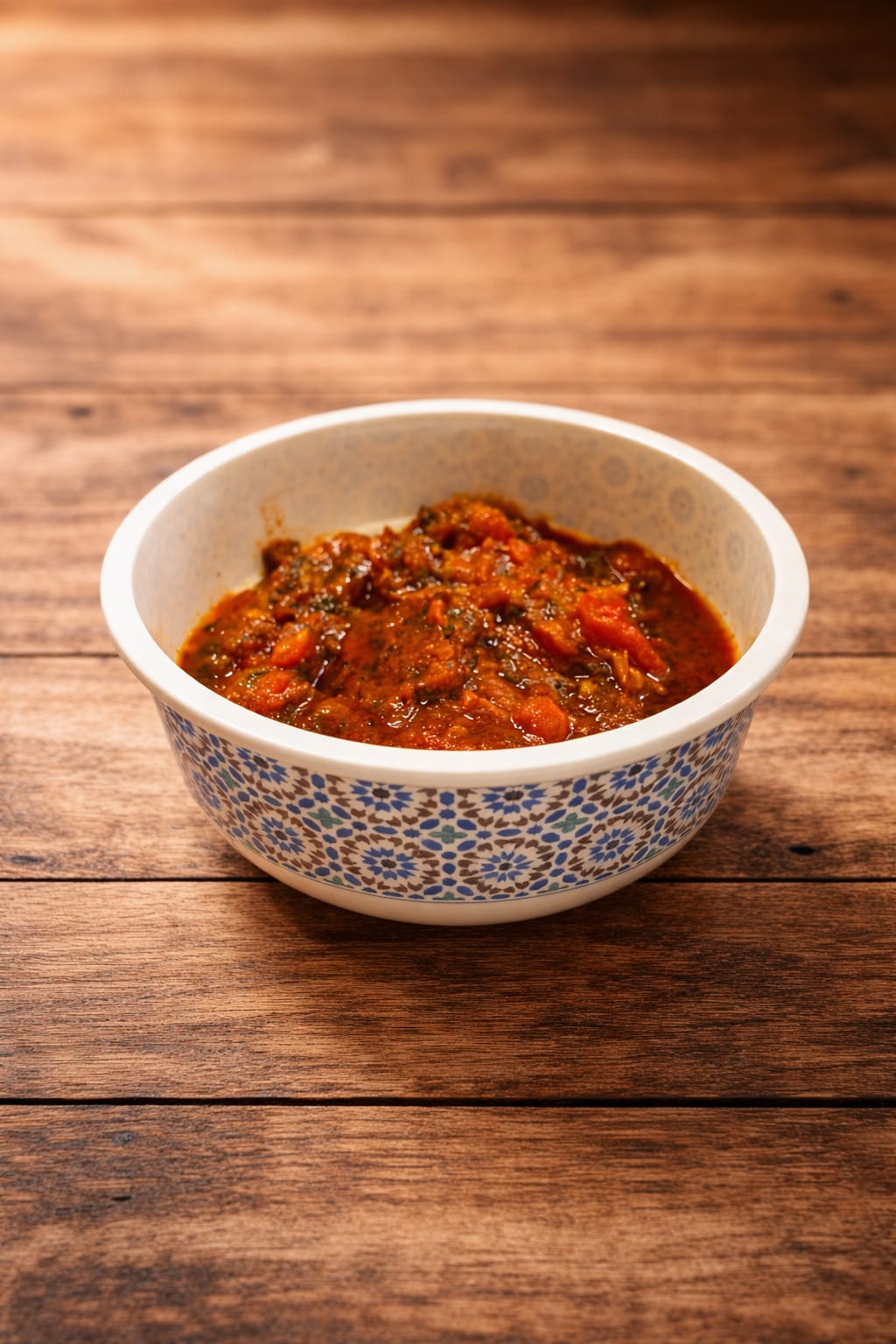
A thick soup of dried split peas or broad beans, served in clay bowls with olive oil, cumin and chilli, and eaten with bread. It’s a cheap, filling winter breakfast found mostly in small local stalls. Check: that no butter goes on top.
Msemen and harcha
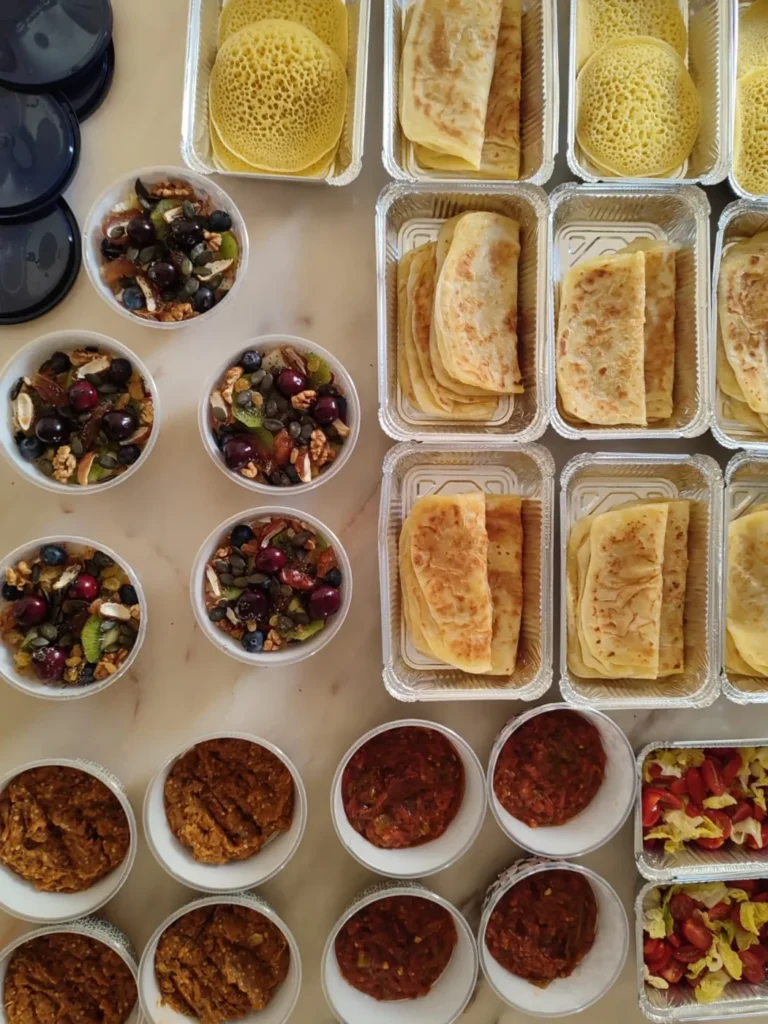
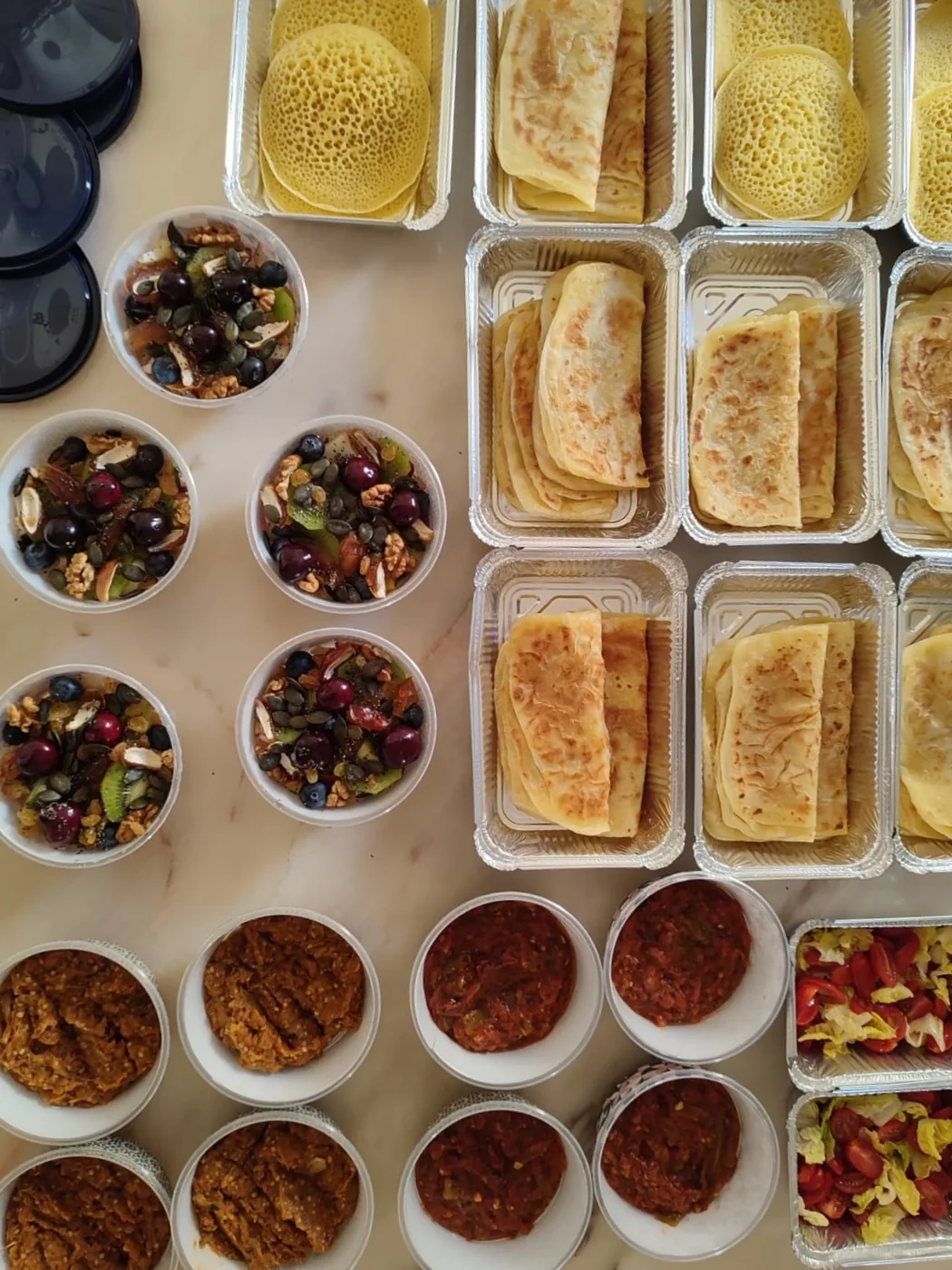
Msemen is the square, layered flatbread fried on a griddle. Harcha is a crumbly semolina griddle bread. Check: msemen is often brushed with butter or smen and served with honey, and harcha is often made with butter and sometimes milk. Ask for oil-only versions, or eat ours, which are made with olive oil.
Sfenj
Moroccan ring doughnuts, fried to order in the morning and late afternoon and sold by weight or by piece. The dough is usually flour, yeast, water and salt. Check: no egg in the dough and no honey on top; ask for plain or sugar only.
Roasted and boiled chickpeas
Sold in paper cones from carts, dusted with cumin and salt. Simple, cheap and vegan.
Bread, olives and cooked salads
Khobz (round bread) from neighbourhood ovens is plant-based. Olive stalls in the souks sell many kinds of olives and preserved lemons. Snack stalls often sell bread stuffed with potato, aubergine (zaalouk) or chips. Check: no egg or mayonnaise in the filling.
Fresh orange juice, sugarcane and fruit
Orange juice is squeezed in front of you at carts and on Jemaa el-Fnaa. Fruit carts sell prickly pears (in late summer), dates, figs and seasonal fruit. Check: mixed juices and “avocado” or “almond” drinks usually contain milk.
Dates, nuts and dried fruit
Stalls near the spice square sell dates, almonds, walnuts, dried figs and apricots. Perfect for a day trip. Check: honey-coated nuts and sesame-honey sweets.
Mint tea
Green tea, fresh mint and sugar. Always vegan, sometimes very sweet: ask for “chwiya sokkar” (a little sugar).
What to check: butter, honey, milk and meat stock
- Butter or smen on breads, pancakes and soups. Ask: “bla zebda, bla smen”.
- Honey on msemen, baghrir, sfenj and sweets. Ask: “bla ‘assel”.
- Milk in harcha, some pancake batters, coffee and mixed juices. Ask: “bla hlib”.
- Meat stock in soups, harira and stews. Ask: “Fih lham wla marqa dial lham?” (Is there meat or meat stock?)
- Shared grills and fryers: chips and aubergine may be fried in the same oil as fish or meat.
Street food that is usually not vegan
- Harira: often meat stock, sometimes egg.
- Snail soup (babbouche): snails.
- Tanjia, mechoui and sausages (merguez): meat.
- Bastilla and many pastries: butter, egg, sometimes chicken or seafood.
- Chebakia and honey sweets: honey, often butter.
- “Vegetable” couscous at stalls: usually steamed over meat broth.
Want Moroccan street-food flavours without the questions?
Our msemen, baghrir, bissara-style dishes, amlou and fresh juices are all fully vegan, delivered to your riad between 08:30 and 16:00.
Where to find vegan street food in Marrakech
- Jemaa el-Fnaa: orange juice carts all day; food stalls in the evening. Mostly meat and fish, but bread, salads and aubergine are available.
- Around Rahba Kedima (the spice square): dates, nuts, olives and dried fruit.
- Riad Zitoun el Kdim and the lanes south of the square: bread ovens, msemen and sfenj in the morning.
- Mellah and Bab Doukkala markets: everyday local stalls with fruit, olives, chickpeas and bread at local prices.
For sit-down vegan meals, see where to eat vegan in Marrakech. If you want someone to take you around, read our guide to vegan food tours in Marrakech.
Eating street food safely
- Choose busy stalls with high turnover and food cooked in front of you.
- Eat fried food hot, straight from the pan.
- Carry small coins and notes; stalls rarely take cards.
- At Jemaa el-Fnaa, ask the price before you sit down and check the bill.
- If your stomach is sensitive, skip raw salads and ice for the first few days.
Love these flavours? In our vegan cooking class in Marrakech you make msemen and Moroccan cooked salads from scratch with olive oil instead of butter, then eat everything together with mint tea.
Cook Moroccan street-food favourites with us
A fully vegan cooking class with a local family in Marrakech: about four hours, 390 MAD per person.
Keep reading
- Vegan in Morocco: a practical guide for travellers
- Where to eat vegan in Marrakech: a local guide
- What can vegans eat in Marrakech? Moroccan dishes explained
- Vegan breakfast in Marrakech: what to eat and how to order
- Vegan food tours in Marrakech
- Vegan cooking class in Marrakech with a local family
Frequently asked questions
Is there vegan street food in Marrakech?
Yes. Bissara (split pea or broad bean soup), plain msemen, sfenj doughnuts, roasted and boiled chickpeas, bread with olives, fresh orange juice, dates, nuts and mint tea are commonly plant-based. Always check for butter, honey and milk.
Is the food at Jemaa el-Fnaa vegan friendly?
Partly. Most evening stalls on Jemaa el-Fnaa are built around grilled meat, fish, snail soup and harira, but you can usually find bread, salads, aubergine, chips, olives and orange juice. Ask about shared grills and oil, and whether the soup has meat stock.
Is harira vegan?
Usually not. Street harira is commonly made with meat or meat stock and sometimes thickened with egg. Choose bissara instead, which is normally just pulses, olive oil, cumin and water.
Is msemen vegan?
The dough is often just flour, semolina, water, salt and oil, but street msemen is frequently brushed with butter or smen and served with honey. Ask for it with olive oil and no honey, or choose a stall that fries it in oil.
Is street food safe to eat in Marrakech?
Generally yes, if you choose busy stalls where food is cooked fresh in front of you, eat it hot, and avoid salads washed in tap water if you have a sensitive stomach. Orange juice stalls are popular; ask for no ice and no added water if you are cautious.