We are Dounia and Hassane, a family from Marrakech who cook fully plant-based Moroccan food every day. Travellers often message us before their trip with the same worry: can I really be vegan in Morocco? You can. Moroccan home cooking is full of vegetables, beans, bread and olive oil. The trick is knowing where butter, honey, milk and meat stock hide. This guide covers what to eat, what to ask, and how it changes between cities.
Is Morocco vegan friendly?
Moroccan food is not vegan by design, but a large part of it is plant-based by habit. Families eat meat mostly at weekends and celebrations. Weekday meals are lentils, beans, cooked salads and vegetable tagines eaten with bread. Markets sell excellent produce, dates, nuts, olives and olive oil all year.
The difficulty is different from Europe. Menus rarely say “vegan”, waiters may hear “vegetarian” and still bring a dish cooked in meat stock, and butter or honey goes on top at the last moment. Most of the time this isn’t carelessness. In Moroccan cooking, butter, honey and stock count as seasoning, not as animal products. Once you ask about those, Morocco becomes easy.
Moroccan dishes that are vegan (or easy to make vegan)
| Dish | What it is | Vegan? |
|---|---|---|
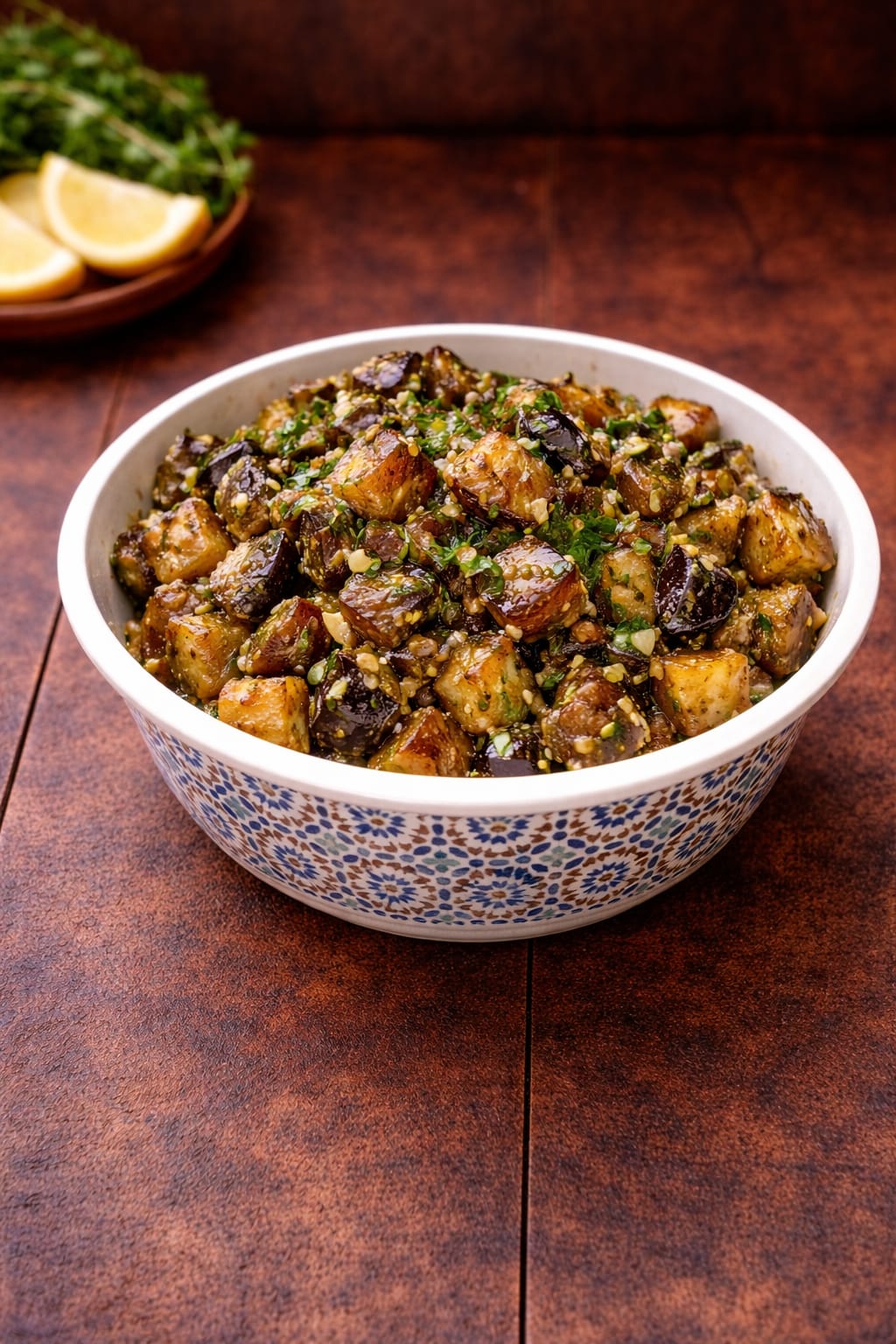
| Zaalouk | Aubergine, tomato, garlic and cumin cooked in olive oil | Vegan |
| Taktouka | Roasted peppers and tomato salad | Vegan |
| Adas (lentils) | Brown lentils with tomato and spices | Usually vegan; ask about smen |
| Loubia | White beans in tomato sauce | Usually vegan; some add meat |
| Bissara | Split pea or broad bean soup with olive oil and cumin | Usually vegan |
| Vegetable tagine | Slow-cooked seasonal vegetables | Can be vegan; ask about stock and smen |
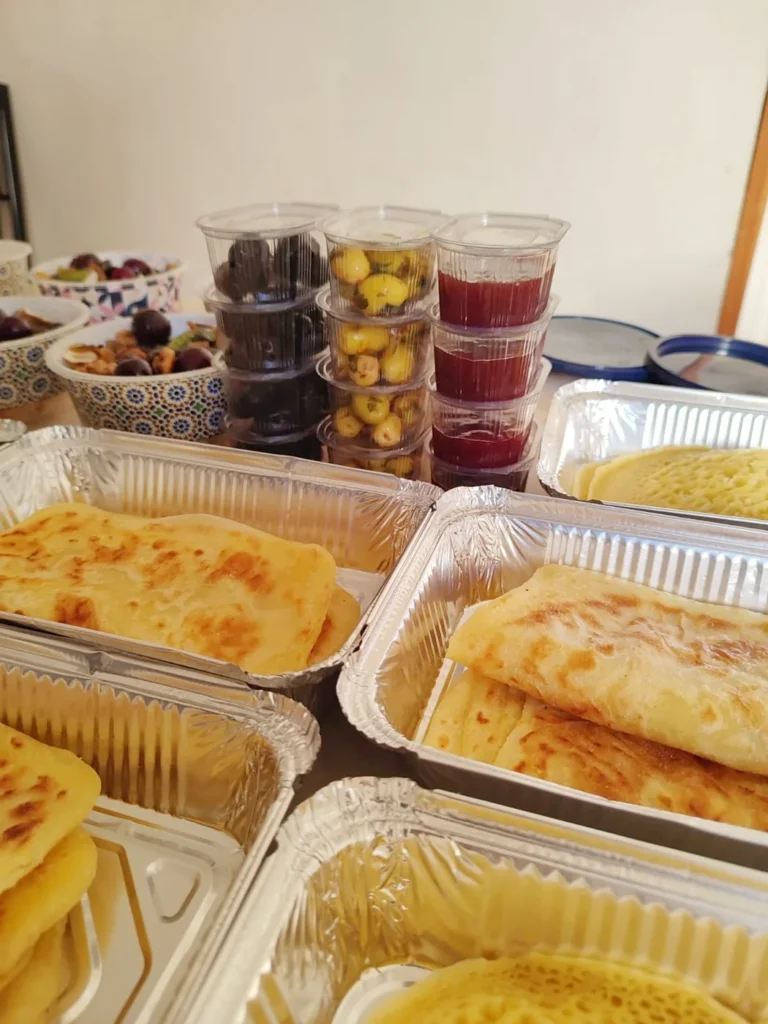
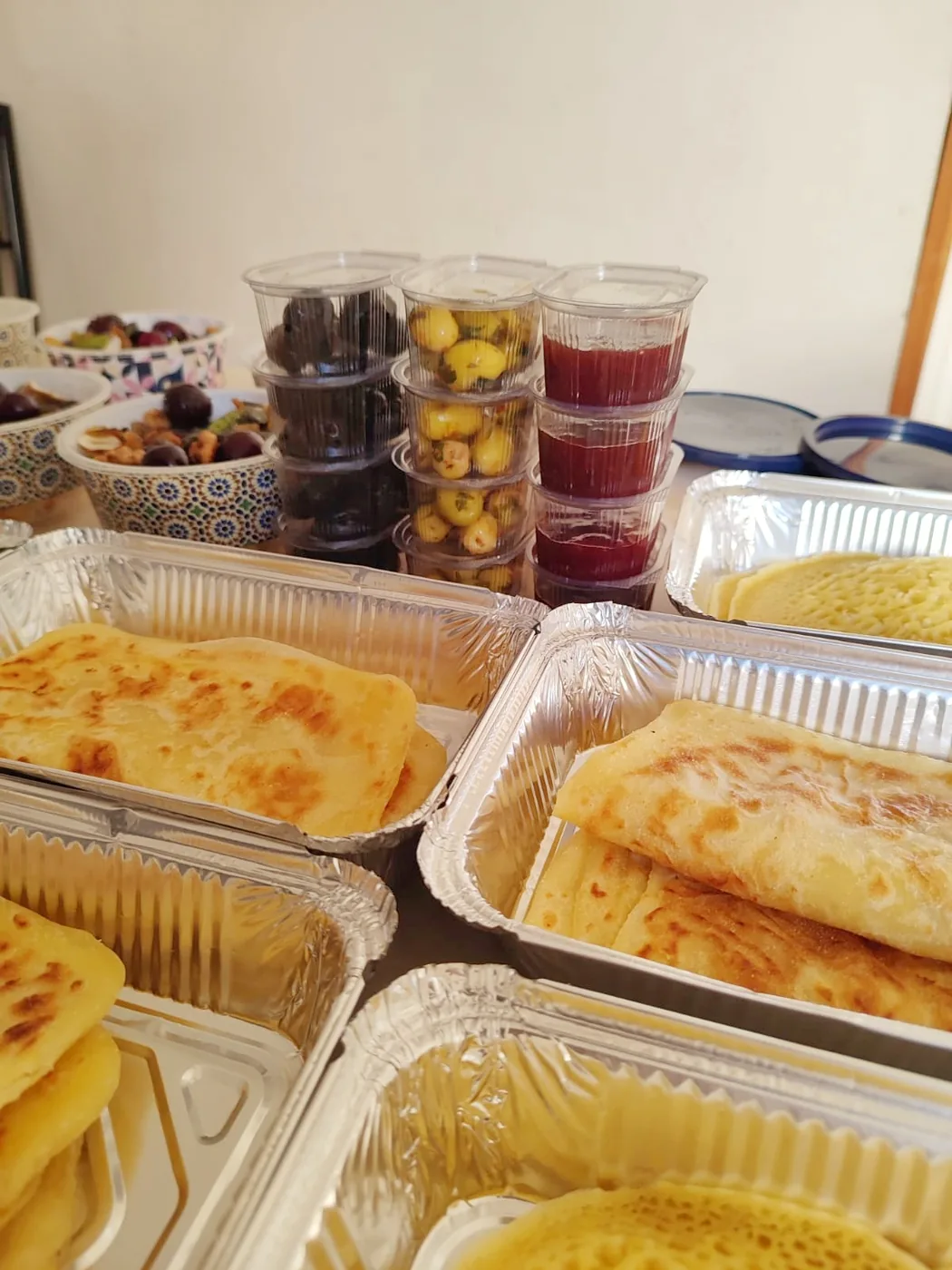
| Msemen and baghrir | Layered flatbread and semolina pancakes | Can be vegan; usually served with butter and honey |
| Amlou | Almond, argan oil and sweetener spread | Can be vegan; often contains honey |
| Couscous | Steamed semolina with vegetables | Rarely vegan as served |
| Harira | Tomato, lentil and chickpea soup | Usually not vegan (meat, stock, sometimes egg) |
We explain each dish in more detail, with what to check, in What can vegans eat in Marrakech? The same dishes are cooked across the country, with regional twists.
Butter, honey, dairy and meat stock: what to check
Butter and smen
Smen is a preserved, fermented butter with a strong flavour. A spoonful often goes into couscous, tagines, lentils and bissara just before serving, and msemen layers are often brushed with butter. Ask: “Fih zebda wla smen?” (Is there butter or smen?) and request olive oil instead.
Honey
Honey goes on baghrir, msemen and sfenj, into pastries like chebakia, and often into amlou and some tagines with prunes. Ask for jam, amlou made without honey, or olive oil.
Dairy
Milk turns up in coffee (café au lait or nous-nous), in avocado and almond juices at juice bars, and in some pancake batters and pastries. Order coffee black (kahwa kahla) and ask juice stalls for no milk. Plant milks are mostly limited to newer cafés in big cities.
Meat and chicken stock
This is the one most people miss. Couscous is normally steamed over a meat broth, harira is often made with meat stock, and a “vegetable” tagine may share a pot or broth with a meat one. Ask: “Wach mtayba b lham?” (Was it cooked with meat?) or in French “Le couscous est cuit à la vapeur de bouillon de viande?”
Phrases that work better than “vegan”
Most people won’t know the word “vegan”. Name the ingredients instead. Darija (Moroccan Arabic) is understood everywhere; French works in cities and tourist areas.
| English | Darija | French |
|---|---|---|
| No meat | bla lham | sans viande |
| No butter | bla zebda | sans beurre |
| No honey | bla ‘assel | sans miel |
| No milk / cheese | bla hlib / bla jben | sans lait / sans fromage |
| No eggs | bla bid | sans œufs |
| Only vegetables, with olive oil | ghir lkhodra, b zit l’oud | seulement des légumes, à l’huile d’olive |
Being vegan in Morocco, city by city
Marrakech (Marrakesh)
The easiest place in Morocco to eat vegan. The Medina has vegetarian and vegan-friendly cafés around Riad Zitoun, and Gueliz has bakeries and cafés with plant milk. Breakfast is the hardest meal here, because most riad breakfasts are built around butter, eggs, cheese and honey. That’s why we started a fully vegan breakfast delivery service. For places to eat out, read where to eat vegan in Marrakech. For snacks in the souks, read our vegan street food guide.
Fes
The old medina is more traditional and has fewer labelled vegan menus, but the street food is very plant-friendly. Bissara is a Fes breakfast classic, and you will find lentils, beans and bread everywhere. Ask about smen, which is used generously here.
Essaouira
A relaxed coastal town with several health-food and vegan-friendly cafés. Restaurants focus on fish, so ask about fish stock in soups and tagines.
Chefchaouen, the Atlas Mountains and the desert
Guesthouses and desert camps cook set menus. Tell them you eat vegan when you book, not when you arrive. Vegetable tagine, salads, lentils and bread are easy for them to make if they know in advance. Bring nuts, dates and amlou made without honey for long drives.
Arriving in Marrakech?
Start your trip with a fully vegan Moroccan breakfast delivered to your riad, with no ingredients to double-check. Same-day orders are welcome.
Practical tips for vegan travellers in Morocco
- Pick dishes that are vegan by default (zaalouk, taktouka, lentils, bissara) when it’s hard to communicate.
- Tell your riad or guesthouse before you arrive, especially for breakfast and set dinners.
- Ramadan: many cafés close during the day, but evening ftour tables are full of dates, soup and bread. Ask whether the harira contains meat.
- Carry snacks for long drives: dates, almonds, khobz bread and fruit from any market.
- Mention allergies separately: almonds, peanuts, sesame and wheat are everywhere.
If you want to cook these dishes at home, join our vegan Moroccan cooking class in Marrakech. You cook zaalouk, taktouka, lentils, a vegetable tagine and msemen with us, entirely without butter, honey or stock.
Learn vegan Moroccan cooking with a local family
About four hours, 390 MAD per person, meal included. Book on WhatsApp and we will confirm the date.
Keep reading
- Where to eat vegan in Marrakech: a local guide
- What can vegans eat in Marrakech? Moroccan dishes explained
- Vegan breakfast in Marrakech: what to eat and how to order
- Vegan street food in Marrakech: what to try and what to check
- Vegan cooking class in Marrakech with a local family
- Vegan food in Marrakech: a local’s guide
Frequently asked questions
Is Morocco vegan friendly?
Yes, more than most travellers expect. Everyday Moroccan food is built on vegetables, pulses, bread, olive oil, nuts and fruit. The difficulty is hidden animal products: butter or smen, honey, milk and meat stock. If you know what to ask, you can eat well across the country.
What Moroccan food is vegan?
Usually vegan: zaalouk, taktouka, lentils, white bean stew, bissara, khobz bread, olives, fresh orange juice and mint tea. Often vegan if you ask: vegetable tagine, msemen, baghrir and amlou. Rarely vegan as served: couscous, harira and pastries.
How do I say vegan in Moroccan Arabic?
There is no common everyday word, so name the ingredients instead: bla lham (no meat), bla zebda (no butter), bla ‘assel (no honey), bla jben (no cheese), bla bid (no eggs). In French: sans viande, sans beurre, sans miel, sans lait.
Is vegetarian couscous vegan in Morocco?
Usually not. The semolina is normally steamed over a meat or chicken broth and finished with butter or smen, even when only vegetables are on top. Ask for couscous steamed over water and finished with olive oil, or order it ahead from a kitchen you trust.
Where is the easiest place to be vegan in Morocco?
Marrakech (also spelled Marrakesh) has the most vegan-friendly cafés and the only fully plant-based breakfast delivery we know of. Essaouira and the newer parts of Fes, Rabat and Casablanca are also fairly easy. In small towns and the mountains, stick to dishes that are vegan by default.