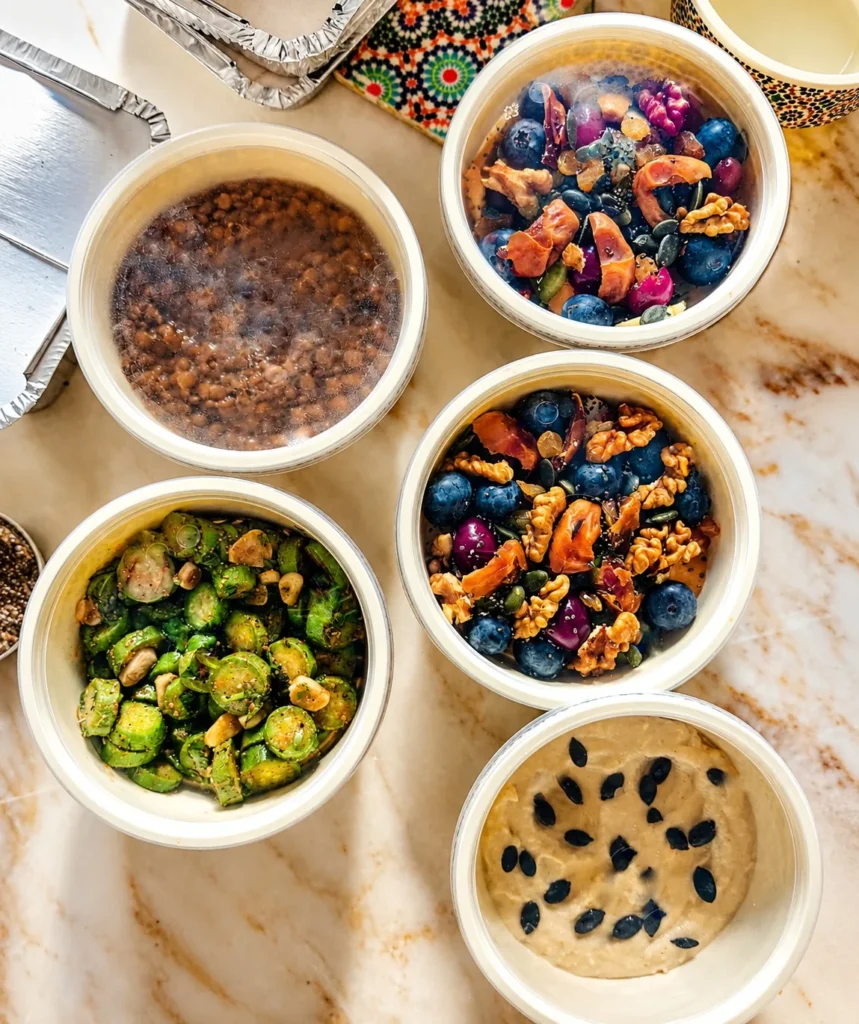
We live and cook in Marrakech, and the most common message we get from plant-based travellers is some version of “will I actually eat well here?” The honest answer is yes. Vegan food in Marrakech is not a niche that arrived with trendy cafés; it is built into how Moroccan families have always eaten on ordinary days: lentils, beans, vegetables, bread, olive oil, olives, nuts, fruit and a lot of mint tea. This guide explains what to eat, where to look for it, and the few ingredients that quietly make a dish non-vegan.
Why Moroccan home cooking suits vegans
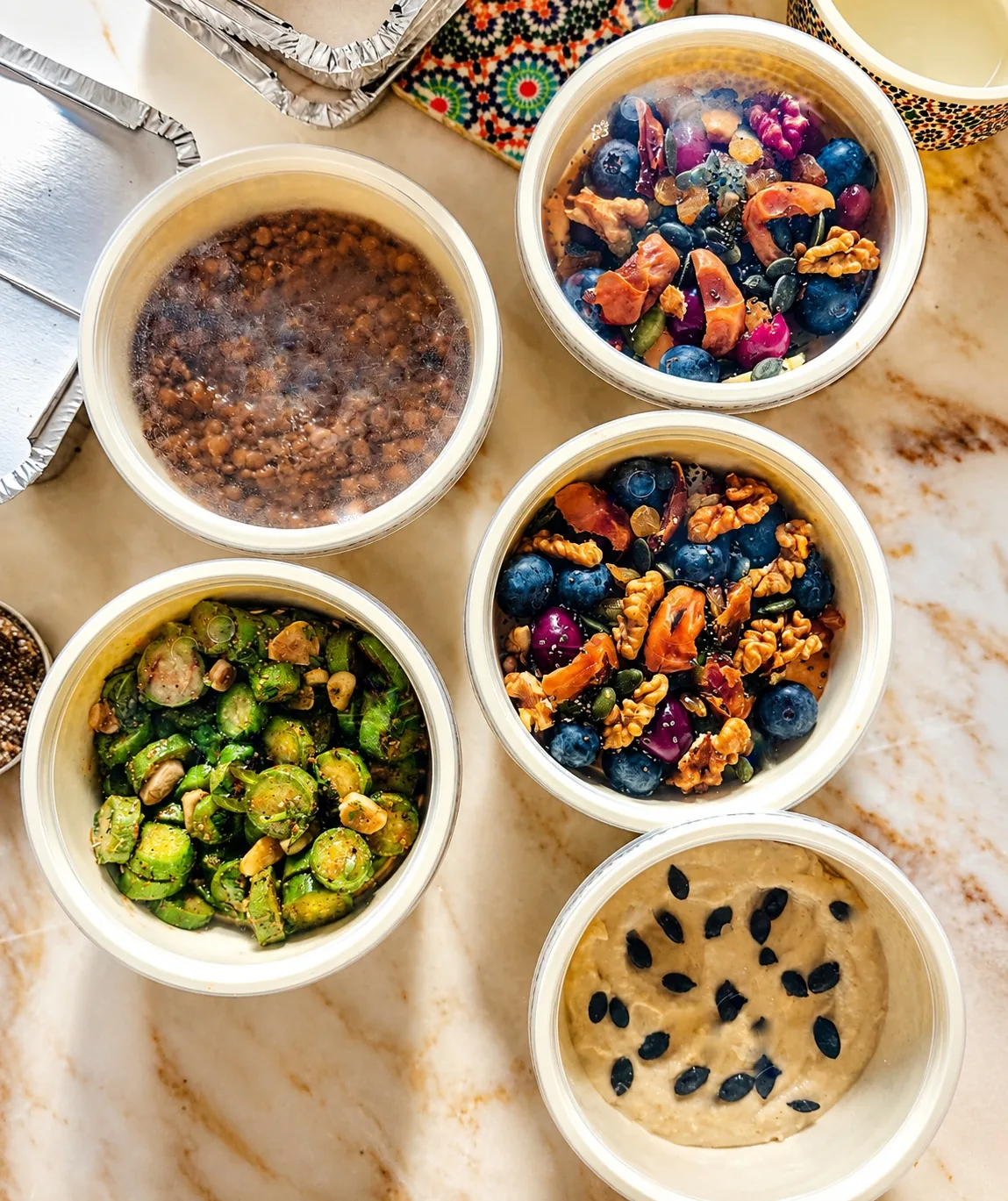
Meat has traditionally been the expensive part of the Moroccan table, kept for Fridays, guests and celebrations. The food eaten the rest of the week is based on what is cheap, filling and local: chickpeas, lentils, split peas, broad beans, seasonal vegetables, semolina, bread and olive oil. That is why so many classic dishes need no adaptation at all. A plate of zaalouk, taktouka and bread is not a “vegan option” here; it is simply lunch.
Marrakech also sits close to some of the best produce in the country. Oranges and clementines come from the Souss and Haouz, olives and olive oil from the surrounding plains, almonds and walnuts from the Atlas, and argan oil from the southwest. The fruit and vegetable markets outside the tourist souks are the best evidence of how central plants are to local cooking.
The three ingredients to watch for
| Ingredient | Where it hides | What to ask |
|---|---|---|
| Smen (aged, salted butter) | Tagines, couscous, harira, some bissara, msemen and harcha | “Bla smen, ghir zit” — no smen, only oil |
| Meat or chicken stock | Couscous steamed over broth, soups, “vegetable” tagines cooked in a shared pot | Ask how the couscous or soup was cooked, not only what is in it |
| Honey and butter | Baghrir, msemen, chebakia and most pastries | Ask for olive oil, jam or amlou made without honey |
Eggs, cheese and milk are easier to spot, but they do turn up in harira, café salads and juice-cart smoothies. The phrase “vegetarian” is often understood as “no visible meat”, so be specific.
A day of vegan food in Marrakech
Morning
Breakfast is the easiest meal of the day. Local bread, olive oil, olives, fresh orange juice and mint tea are standard everywhere, and flatbreads such as msemen and the spongy semolina pancake baghrir can be made fully plant-based. Our guide to vegan breakfast in Marrakech covers the morning dishes in detail.
Lunch
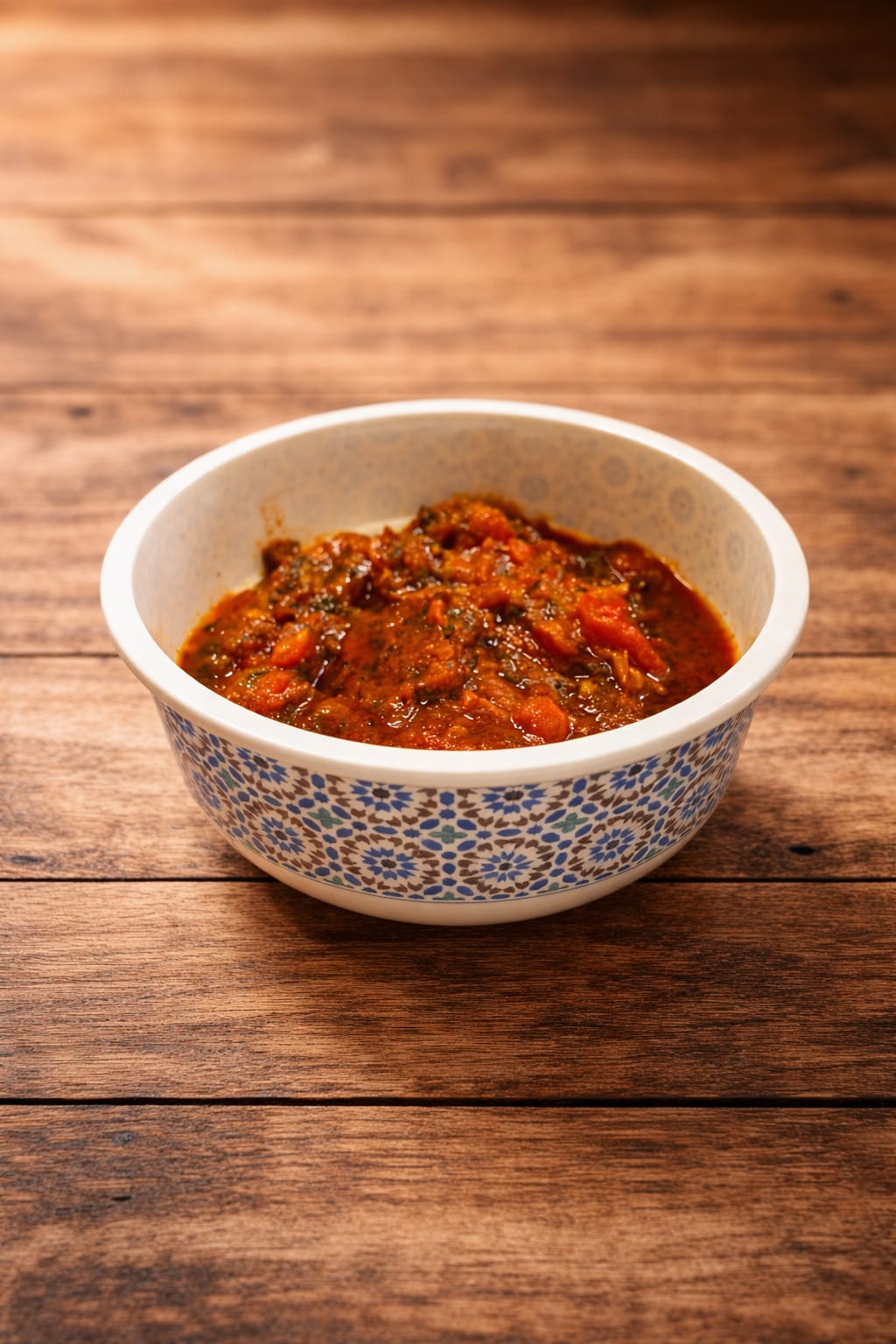
Lunch is the main meal in many Moroccan homes. Look for a spread of cooked salads — zaalouk, taktouka, carrot or courgette salads with cumin — with bread, followed by lentils, white bean stew (loubia) or a vegetable tagine. On Fridays many families eat couscous with seven vegetables; it is worth asking for a version steamed without meat broth.
Afternoon and evening
Mid-afternoon is for mint tea with roasted almonds, dates or peanuts. In the evening the food stalls on Jemaa el-Fnaa light up; the vegetable and harira stalls can be hit-or-miss for vegans, but bread, olives, fresh juice and some salads are reliable. Many Medina rooftops now label vegan dishes clearly; our vegan restaurant recommendations list places worth planning around.
Where to find vegan food in Marrakech
- Neighbourhood bakeries and soup counters. Early in the morning, small counters sell bissara with bread, olive oil and cumin for a few dirhams.
- The souks. Olive and pickle stalls, dried fruit and nut sellers, and spice shops are almost entirely plant-based; buy amlou only where you can confirm it has no honey.
- Produce markets. Outside the tourist lanes you will find the seasonal fruit and vegetables that anchor local cooking — oranges in winter, figs and grapes in late summer, pomegranates in autumn.
- Cafés and rooftops. Newer cafés in Gueliz and the Medina often mark vegan dishes; traditional restaurants will usually adapt tagines and salads if you ask clearly.
- Your riad. Standard riad breakfasts lean on butter, eggs, cheese and honey. Tell your host in advance, or have a full plant-based breakfast delivered instead.
Useful phrases for ordering
| Darija | French | Meaning |
|---|---|---|
| bla lham | sans viande | without meat |
| bla zebda / bla smen | sans beurre | without butter |
| bla jben, bla bid | sans fromage, sans œufs | without cheese or eggs |
| bla ‘assal | sans miel | without honey |
| ghir l-khodra | seulement des légumes | only vegetables |
Mention allergies separately. Moroccan cooking uses almonds, peanuts, sesame and wheat a lot, and “vegan” does not mean nut-free or gluten-free.
Vegan food delivered to your riad
If you would rather not negotiate ingredients before your first coffee, we cook a fully plant-based Moroccan breakfast and deliver it to riads, hotels and apartments across Marrakech, including Medina addresses the courier reaches on foot. Choose dishes from the breakfast menu or a ready-made pack, then order through the online ordering form or on WhatsApp. If you want to learn to cook these dishes yourself, join our vegan Moroccan cooking class with a local family.
| Pack | Orange juices included | Price |
|---|---|---|
| Solo Pack | 1 | 135 MAD |
| Couple Pack | 2 | 270 MAD |
| Family Pack | 3 | 385 MAD |
| Premium Pack | 4 | 455 MAD |
Delivery is 25 MAD in the Medina and Gueliz and 100 MAD elsewhere in Marrakech, payment is cash on delivery, and slots run every 30 minutes from 08:30 to 16:00. Same-day orders are welcome for any slot at least one hour away. See every pack and dish on our breakfast menu.
Eat vegan in Marrakech without the guesswork
Fully plant-based Moroccan breakfast, delivered to your door. Same-day orders welcome.
Keep reading
- What can vegans eat in Marrakech? 12 Moroccan dishes explained
- Vegan breakfast in Marrakech: Moroccan dishes to start your day
- Where to have vegan food in Marrakech
- Best vegan restaurants in Marrakech
- Vegan food tours and cooking classes in Marrakech
- Traditional Moroccan vegan breakfast foods
Frequently asked questions
Is it easy to find vegan food in Marrakech?
Easier than most visitors expect. Everyday Moroccan food relies on pulses, vegetables, bread, olive oil, olives, nuts and fruit, so many staples are plant-based by default. The things to watch for are smen (preserved butter), meat stock in couscous and soups, and honey on pastries.
What is the best vegan food to try in Marrakech?
Start with bissara (split-pea or broad-bean soup), zaalouk (smoky aubergine and tomato), taktouka (peppers and tomato), lentils, white bean stew, a vegetable tagine made with olive oil, fresh orange juice and mint tea. For breakfast, try olive-oil msemen, baghrir with amlou, and local bread with olives.
How do I say vegan in Moroccan Arabic?
There is no common everyday word, so name the ingredients instead: bla lham (no meat), bla zebda (no butter), bla smen (no preserved butter), bla jben (no cheese), bla bid (no eggs) and bla ‘assal (no honey). Most people in Marrakech also understand French: sans viande, sans beurre, sans œufs, sans miel.
Can I get vegan food delivered in Marrakech?
Yes. We cook fully plant-based Moroccan breakfasts and light meals and deliver them to riads, hotels and apartments across Marrakech in 30-minute slots from 08:30 to 16:00. Same-day orders are welcome for any slot at least one hour away, and delivery is 25 MAD in the Medina and Gueliz or 100 MAD elsewhere.
Is street food in Marrakech vegan?
Some of it. Bissara, bread, olives, roasted chickpeas, nuts, dates, fresh juice and many salads are plant-based. Grilled meat stalls, snail soup and most pastries are not. Watch for butter on flatbreads and milk in juice-cart smoothies.