A food tour is the fastest way to understand Marrakech. In a couple of hours you learn which bakery the neighbourhood actually uses, why every household buys olives by the scoop, and what a spice stall is really selling. The question plant-based travellers ask is whether any of that works without meat — and the answer is that a vegan food tour in Marrakech is not only possible, it is one of the best ways to eat here, because the traditional street foods of the Medina were plant-based long before anyone used the word vegan.
Why a vegan food tour works in Marrakech
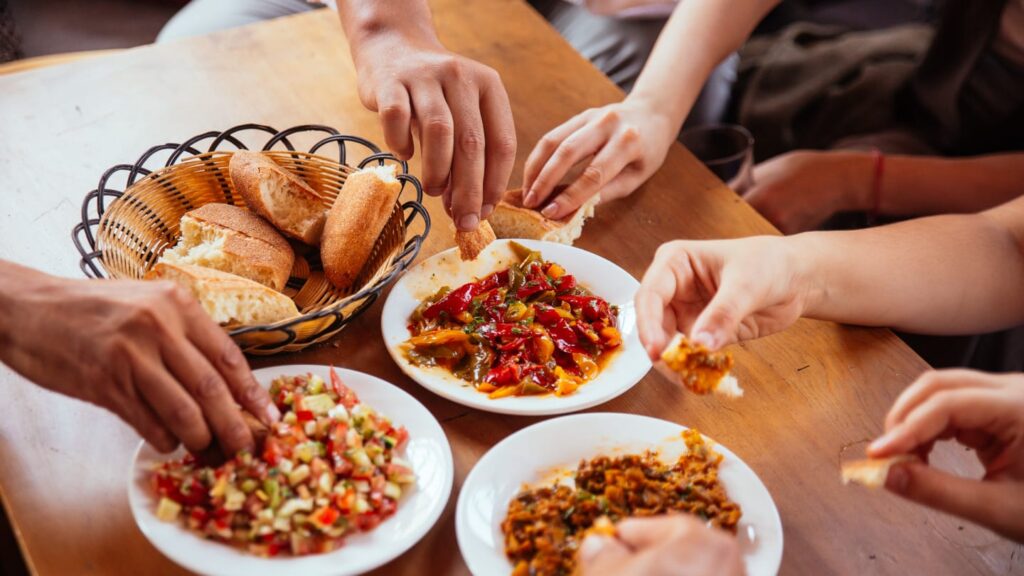
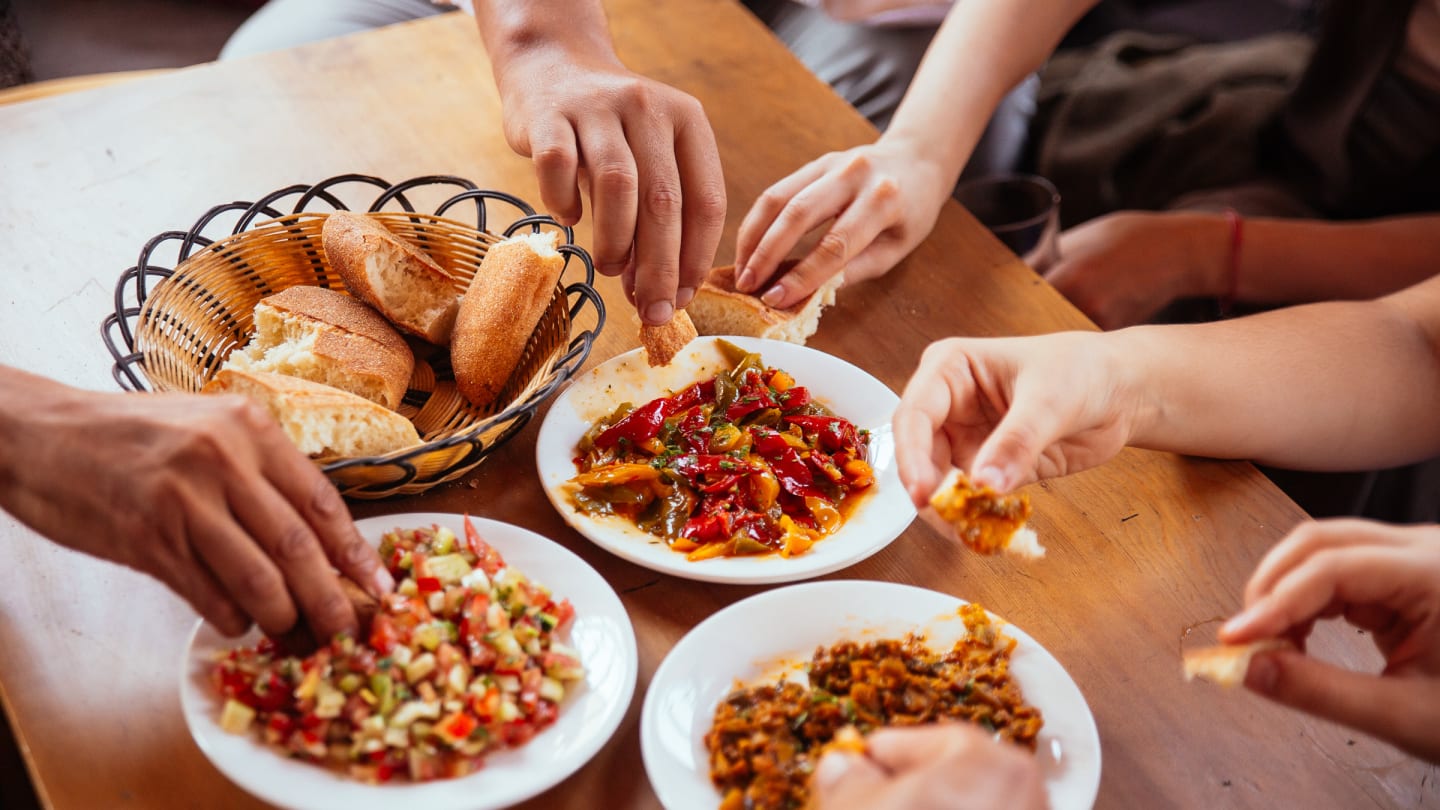
Moroccan cooking is built on pulses, vegetables, bread, olive oil, nuts and dried fruit. Meat was historically expensive and served for guests and holidays, so the everyday food — bissara, lentils, chickpeas, zaalouk, taktouka, bread, olives, mint tea — is naturally plant-based. On a well-planned tour you are not asking for substitutions; you are eating what people in the Medina actually eat on a normal Tuesday.
The three things that turn a vegan tasting non-vegan are smen (fermented butter) stirred into soups and tagines, meat or chicken stock used to steam couscous, and honey poured over pastries. A guide who knows this will order around it without you having to interrupt every stop.
A plant-based tasting route through the Medina
| Stop | What you taste | What to check |
|---|---|---|
| Morning soup counter | Bissara — split-pea or broad-bean purée with olive oil, cumin and paprika, eaten with bread | Ask for olive oil only, no butter on top |
| Neighbourhood bakery (ferran) | Khobz, msemen, harcha, sometimes baghrir | Msemen and harcha are often made with butter — ask for the olive-oil version |
| Olive and pickle stalls | Green, violet and black olives, preserved lemons, harissa | Naturally vegan; taste before you buy |
| Dried fruit and nut stalls | Dates, figs, apricots, almonds, walnuts | Some coated dates are glazed — ask |
| Spice shop | Ras el hanout, cumin, saffron, argan and amlou | Amlou is sometimes sweetened with honey rather than syrup |
| Juice cart on Jemaa el-Fnaa | Orange, pomegranate in autumn, avocado shakes (dairy) | Ask for juice without milk or ice cream |
| Salad and tagine lunch | Zaalouk, taktouka, lentils, vegetable tagine, bread | No smen, no butter, stock-free couscous |
| Mint tea terrace | Mint tea, sometimes with nuts or dates | Naturally vegan, always very sweet |
Types of food experience and what they cost
| Experience | Length | Typical price per person | Good for |
|---|---|---|---|
| Group street-food walking tour | 3–4 hours, usually evening | 300–700 MAD | Tasting widely, meeting other travellers |
| Private guided food walk | 2–4 hours | 800 MAD and up for the group | Full control over what is vegan |
| Cooking class with market visit | 3–5 hours | 350–900 MAD | Learning to cook it at home |
| Our vegan Moroccan cooking class | About 4 hours including the meal | 390 MAD | 100% plant-based, nothing to check |
| Breakfast delivered to your riad | 30-minute slot, 08:30–16:00 | From 130 MAD + 25 MAD delivery | Eating well on tour-free mornings |
Fuel the tour with a plant-based breakfast
We deliver a full Moroccan vegan breakfast to riads, hotels and apartments across Marrakech, in 30-minute slots from 08:30.
Vegan Moroccan cooking classes
A cooking class is the version of a food tour you take home with you. Most classes in Marrakech start with a walk through a local market to buy vegetables, herbs and spices, then move to a rooftop or a riad kitchen where you cook two or three dishes and eat them.
Our own class is fully plant-based from start to finish. You cook Moroccan dishes that are traditionally vegan rather than adapted ones — zaalouk with grilled aubergine and tomato, taktouka, lentils, a seasonal vegetable tagine steamed without stock, and msemen folded with olive oil instead of butter — then eat them together with bread and mint tea. It runs about four hours and costs 390 MAD per person. If you have allergies or you are travelling with children, tell us when you book and we adapt the menu.
What to ask before you book any food tour
- “Will every tasting be vegan, or vegetarian?” — in Morocco these are often treated as the same thing.
- “How is the couscous steamed?” — vegetable couscous is routinely made with meat or chicken stock.
- “Is smen used in the tagine or the soup?”
- “Are the pastries brushed with honey or butter?”
- “Can we swap the dessert stop?” — vegan sweets are the hardest category in the city, so ask for dates, nuts or fruit instead.
- Timing — most street-food tours run in the evening; if you want bissara and bakery stops, you need a morning tour.
Message the operator in writing (WhatsApp is normal here) so there is a record of what was agreed, and mention any allergy separately — “vegan” does not imply “no nuts”, and Moroccan cooking uses almonds heavily.
Doing it yourself: a self-guided vegan food walk
If you would rather not book anything, this half-day route costs very little:
- 08:00 — bissara at a soup counter near Bab Doukkala or in the Mellah, with bread and cumin.
- 09:00 — a neighbourhood bakery for khobz and olive-oil msemen.
- 10:00 — the spice and dried-fruit souks north of Jemaa el-Fnaa: dates, almonds, figs, olives, preserved lemon.
- 12:00 — salads and a vegetable tagine on a Medina rooftop near Riad Zitoun.
- 15:00 — mint tea and roasted nuts, then fresh orange juice on the square at sunset.
Carry cash in small notes, learn the phrase “bla lham, bla zebda, bla ‘assal, bla jben” (without meat, butter, honey, cheese), and eat where you see local families queueing rather than where the menu is translated into five languages.
For the mornings when you are out on a tour, in the Atlas Mountains or heading to Essaouira, order breakfast the night before for the earliest slot and ask for it packed to travel — roadside stops rarely have anything plant-based beyond bread and olives.
Keep reading
- Vegan breakfast delivery in Marrakech: how to order to your riad
- Vegan light lunch in Marrakech
- Traditional Moroccan vegan breakfast foods
- Where to have vegan food in Marrakech
- Best vegan restaurants in Marrakech
Frequently asked questions
Are there vegan food tours in Marrakech?
Yes. Several street-food and souk walking tours in Marrakech can be run fully plant-based if you tell the guide when you book, and a few cooking classes are built around vegetable Moroccan cooking. There are also private guides who will design a vegan-only route through the Medina. Always confirm in writing that every tasting will be vegan, not just vegetarian.
What do you eat on a vegan food tour in Marrakech?
A typical plant-based route includes bissara (split-pea soup) for breakfast, khobz and msemen from a neighbourhood bakery, olives and preserved lemons from the souk, roasted nuts and dried fruit, fresh orange or pomegranate juice, zaalouk and taktouka salads, vegetable couscous or tagine, and mint tea. Sweets are the hard part, because most pastries contain butter or honey.
How much does a food tour in Marrakech cost?
Group street-food tours generally run from around 300 to 700 MAD per person depending on length and how many tastings are included, and private tours and cooking classes cost more. Our own vegan cooking class is 390 MAD per person and includes the market walk, the cooking and the meal.
Is a cooking class better than a food tour?
A tour is better for tasting widely and learning the souk; a class is better if you want to bring the food home. For vegans a class has one clear advantage: you control every ingredient, so there is no butter or stock to check.
Can you organise a vegan food experience for our group?
Yes. We run vegan Moroccan cooking classes and deliver plant-based breakfasts and light lunches to riads across Marrakech, including for groups. Message us on WhatsApp at +212 673 991614 with your dates and group size.