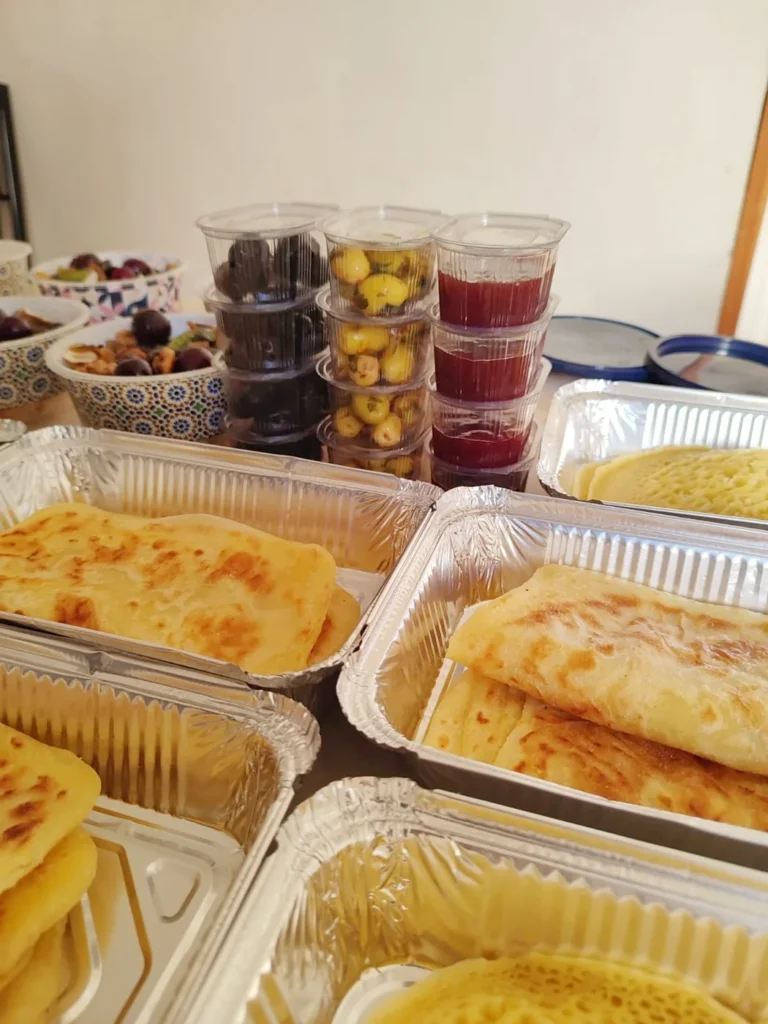
If you are planning a trip and wondering what vegans can eat in Marrakech, the short answer is: a lot, as long as you know which dishes are plant-based by nature and which ones only look like they are. Below are twelve Moroccan dishes you will meet in Marrakech, what goes into each, and exactly what to check before you order. We cook many of them every morning in our own kitchen, fully plant-based.
The 12 dishes at a glance
| Dish | Usually vegan? |
|---|---|
| Bissara | Usually vegan |
| Zaalouk | Vegan |
| Taktouka | Vegan |
| Moroccan lentils (adas) | Usually vegan |
| White bean stew (loubia) | Usually vegan |
| Vegetable tagine | Can be vegan |
| Seven-vegetable couscous | Rarely vegan as served |
| Harira | Usually not vegan |
| Msemen | Can be vegan |
| Baghrir | Batter usually vegan |
| Sfenj | Often vegan |
| Amlou | Can be vegan |
The pattern is simple: pulses, cooked salads and bread are safe ground; anything steamed over broth, finished with butter, or soaked in honey needs a question.
12 Moroccan dishes explained
1. Bissara
Split peas or dried broad beans simmered into a thick purée, finished with olive oil, cumin and paprika, and eaten with bread.
Vegan? Usually vegan. What to check: Ask for olive oil on top rather than butter.
2. Zaalouk
Aubergine roasted or boiled, then cooked down with tomato, garlic, cumin, paprika and olive oil. Served warm or cold with bread.
Vegan? Vegan. What to check: Nothing, beyond the usual shared-kitchen caveat.
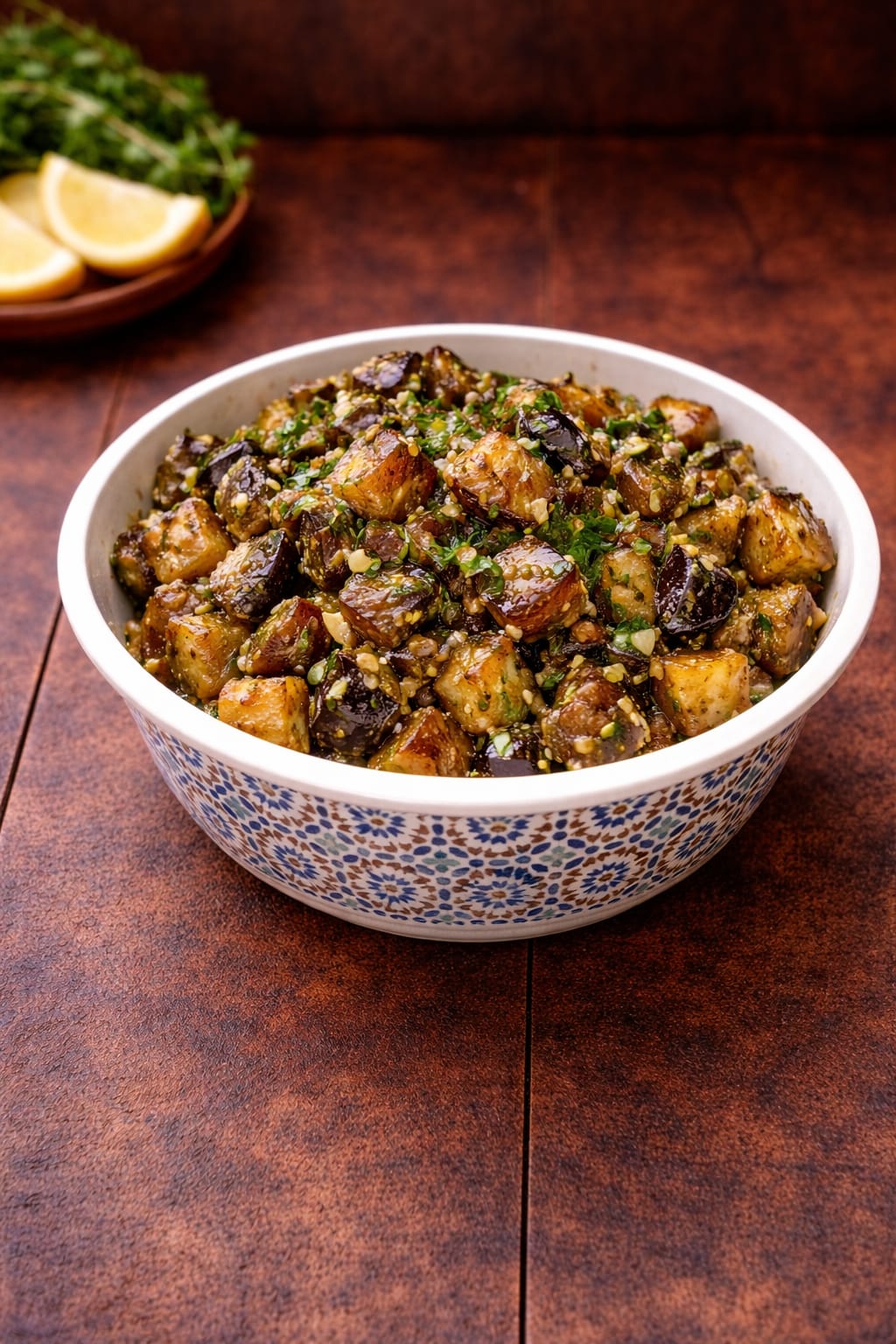
3. Taktouka
Roasted green and red peppers cooked with tomato, garlic and spices in olive oil — a cooked salad eaten with bread.
Vegan? Vegan. What to check: Nothing in most kitchens.
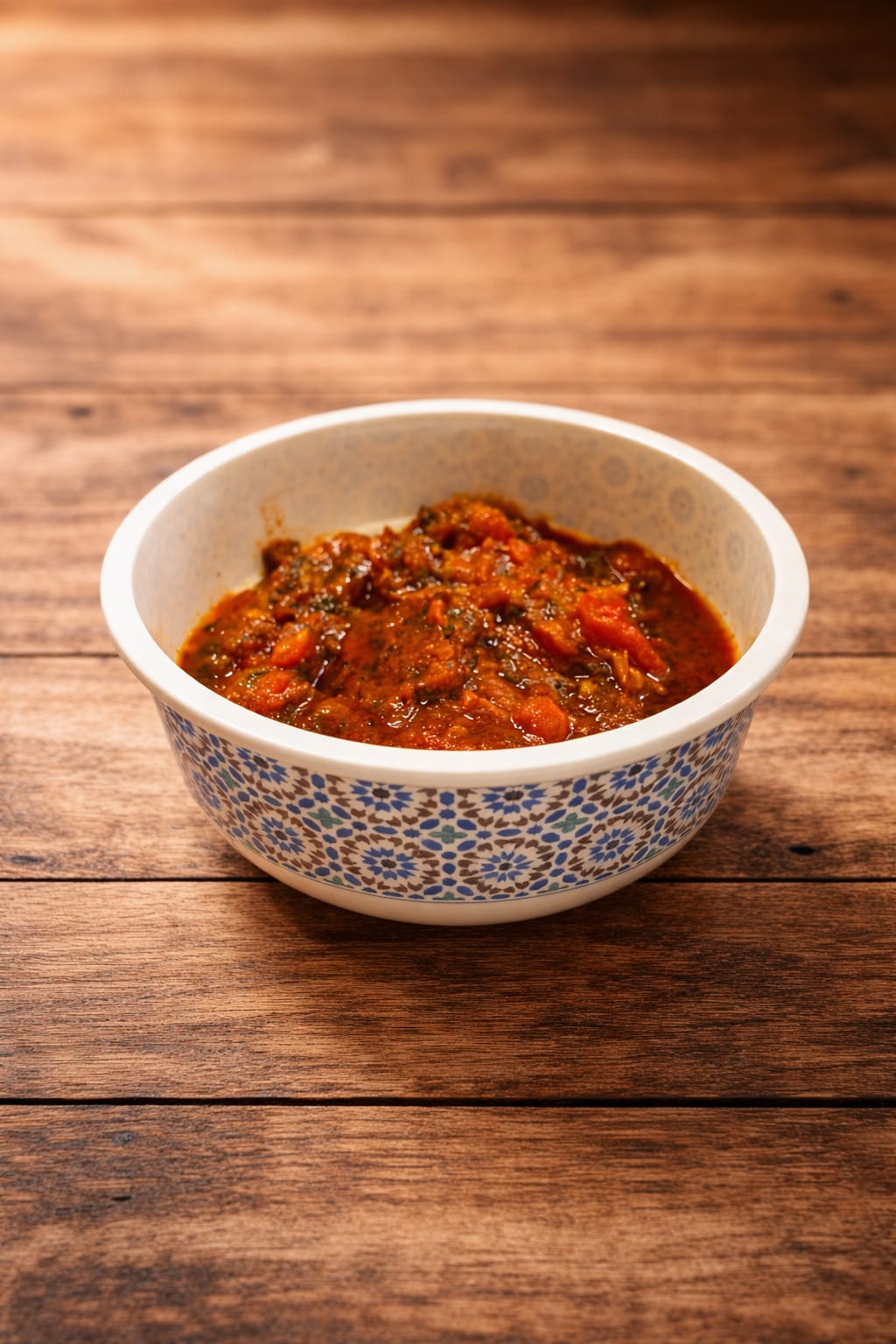
4. Moroccan lentils (adas)
Brown lentils simmered with tomato, onion, garlic, cumin and paprika. A cheap everyday lunch across Morocco.
Vegan? Usually vegan. What to check: Occasionally finished with smen — ask for oil only.
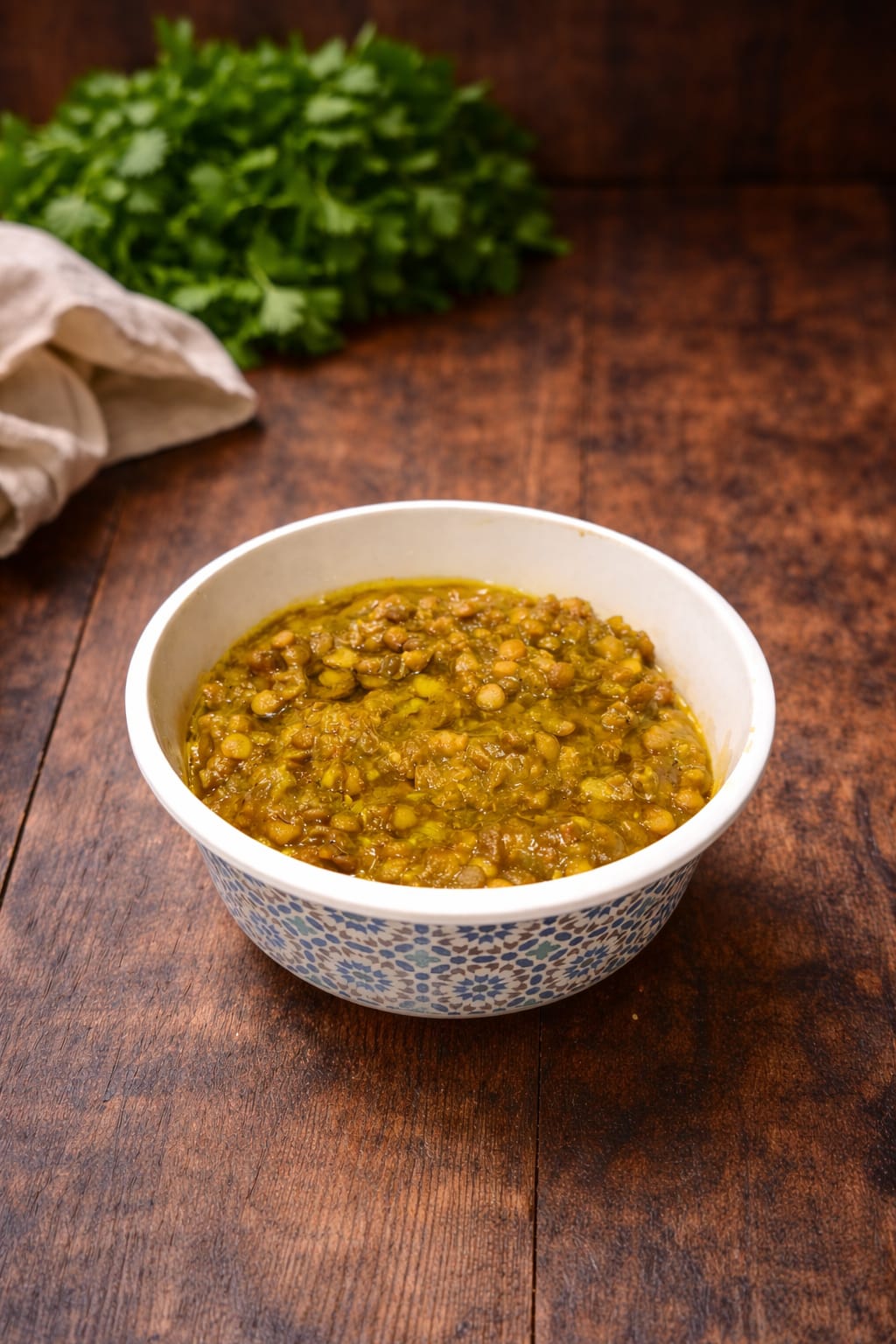
5. White bean stew (loubia)
White beans in a tomato sauce with garlic, cumin and paprika, often mopped up with bread.
Vegan? Usually vegan. What to check: Some versions add meat — confirm before ordering.
6. Vegetable tagine
Seasonal vegetables slow-cooked in the conical clay pot with olive oil, preserved lemon, olives and spices.
Vegan? Can be vegan. What to check: Ask about smen and whether it was cooked in a meat broth or a shared pot.
7. Seven-vegetable couscous
The Friday family dish: steamed semolina topped with carrots, courgettes, pumpkin, turnips, cabbage, chickpeas and more.
Vegan? Rarely vegan as served. What to check: The couscous is normally steamed over meat broth and finished with butter. Request a version made without both.
8. Harira
The tomato, lentil and chickpea soup famous during Ramadan, thickened with flour and fragrant with herbs.
Vegan? Usually not vegan. What to check: Often contains meat or meat stock and sometimes egg. Only order a version described as meat-free and egg-free.
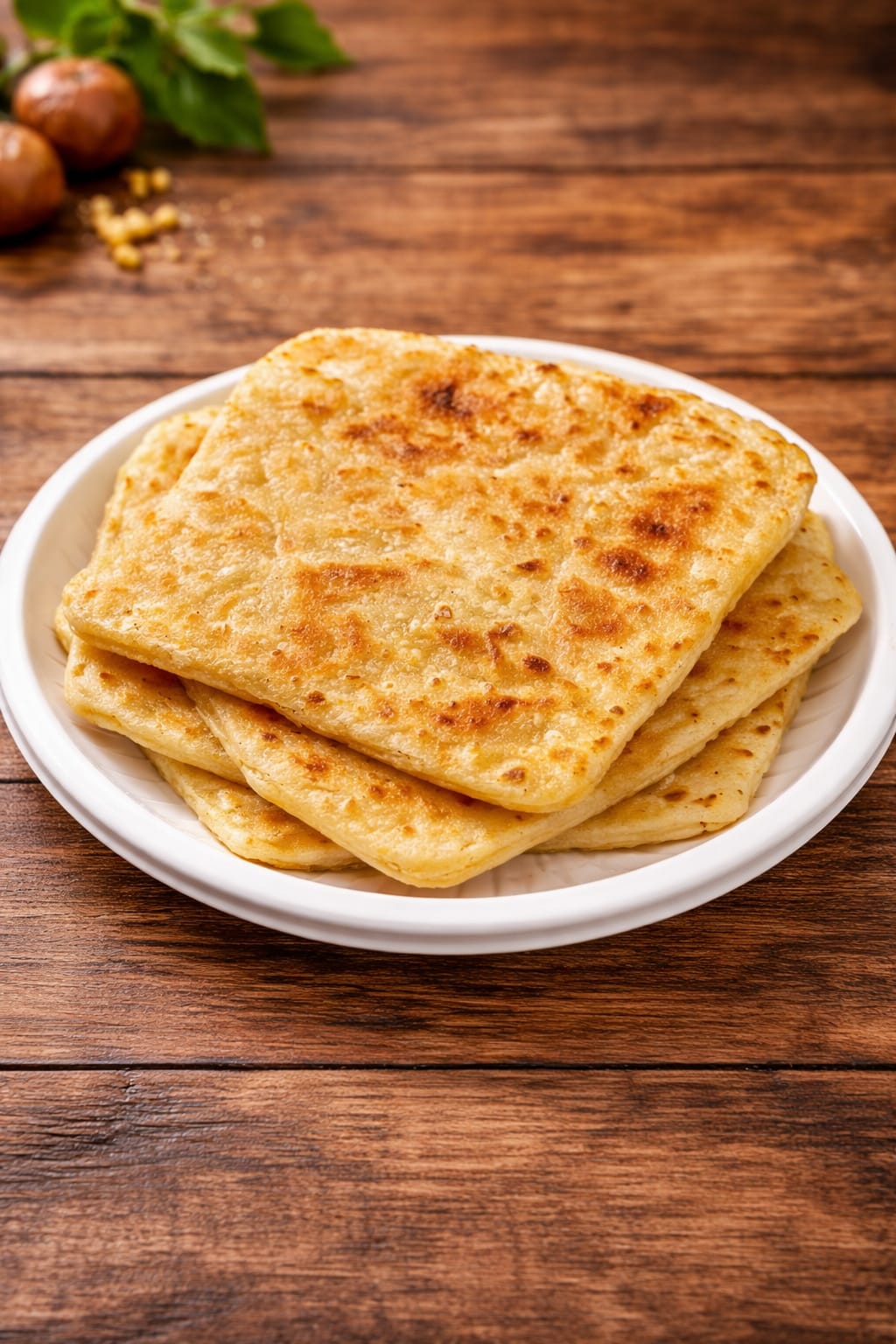
9. Msemen
A square, flaky pan-fried flatbread made from flour and semolina, folded in layers.
Vegan? Can be vegan. What to check: The layers are often brushed with butter or smen, and it is usually served with honey. Ask for the olive-oil version, as we make it.
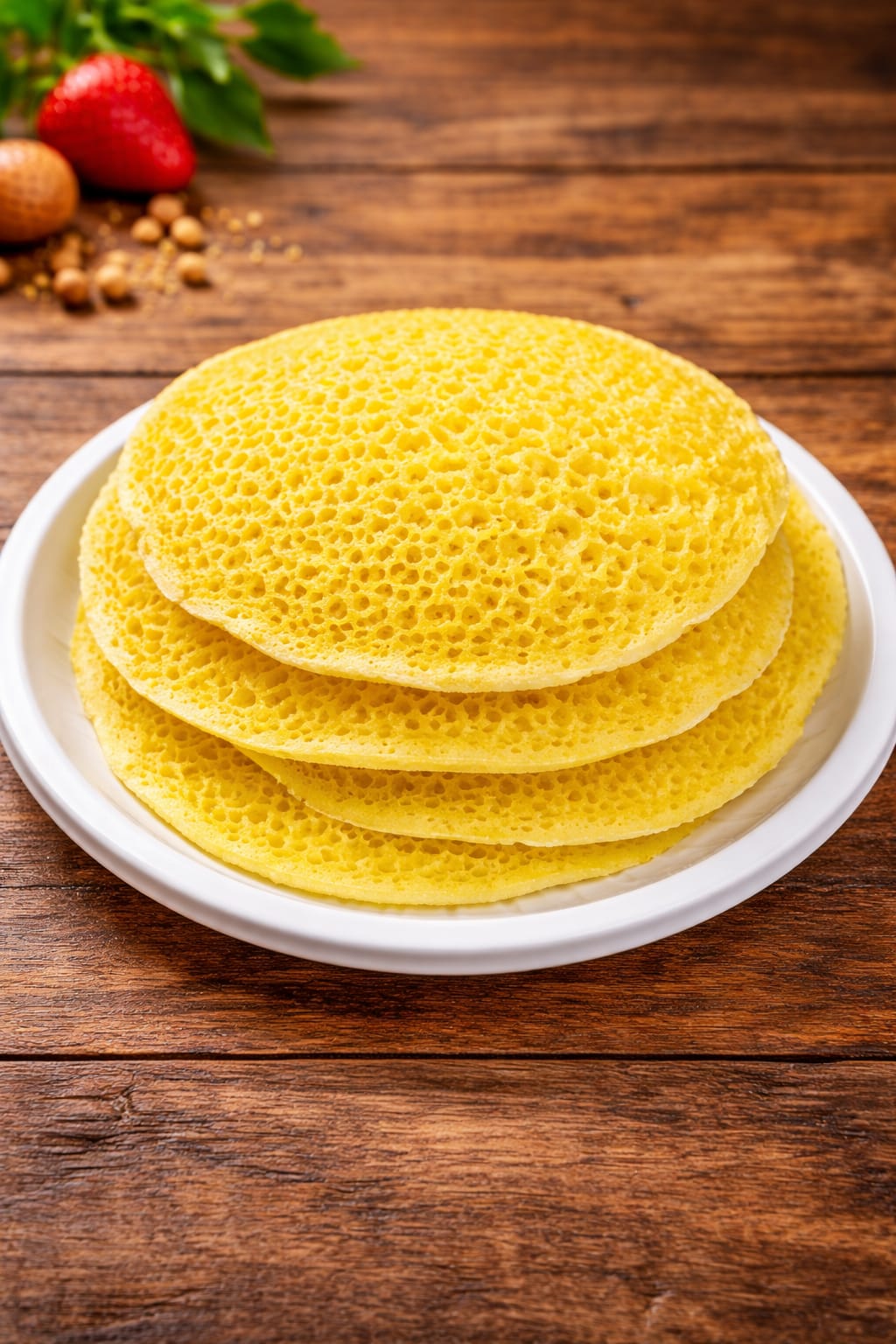
10. Baghrir
The “thousand-hole” pancake made from a fermented semolina batter and cooked on one side only.
Vegan? Batter usually vegan. What to check: It is traditionally drenched in melted butter and honey. Ask for amlou, jam or olive oil instead.
11. Sfenj
Moroccan ring doughnuts, fried to order at street stalls and sometimes dusted with sugar.
Vegan? Often vegan. What to check: The dough is often just flour, yeast, water and salt; confirm no egg and ask what oil is used.
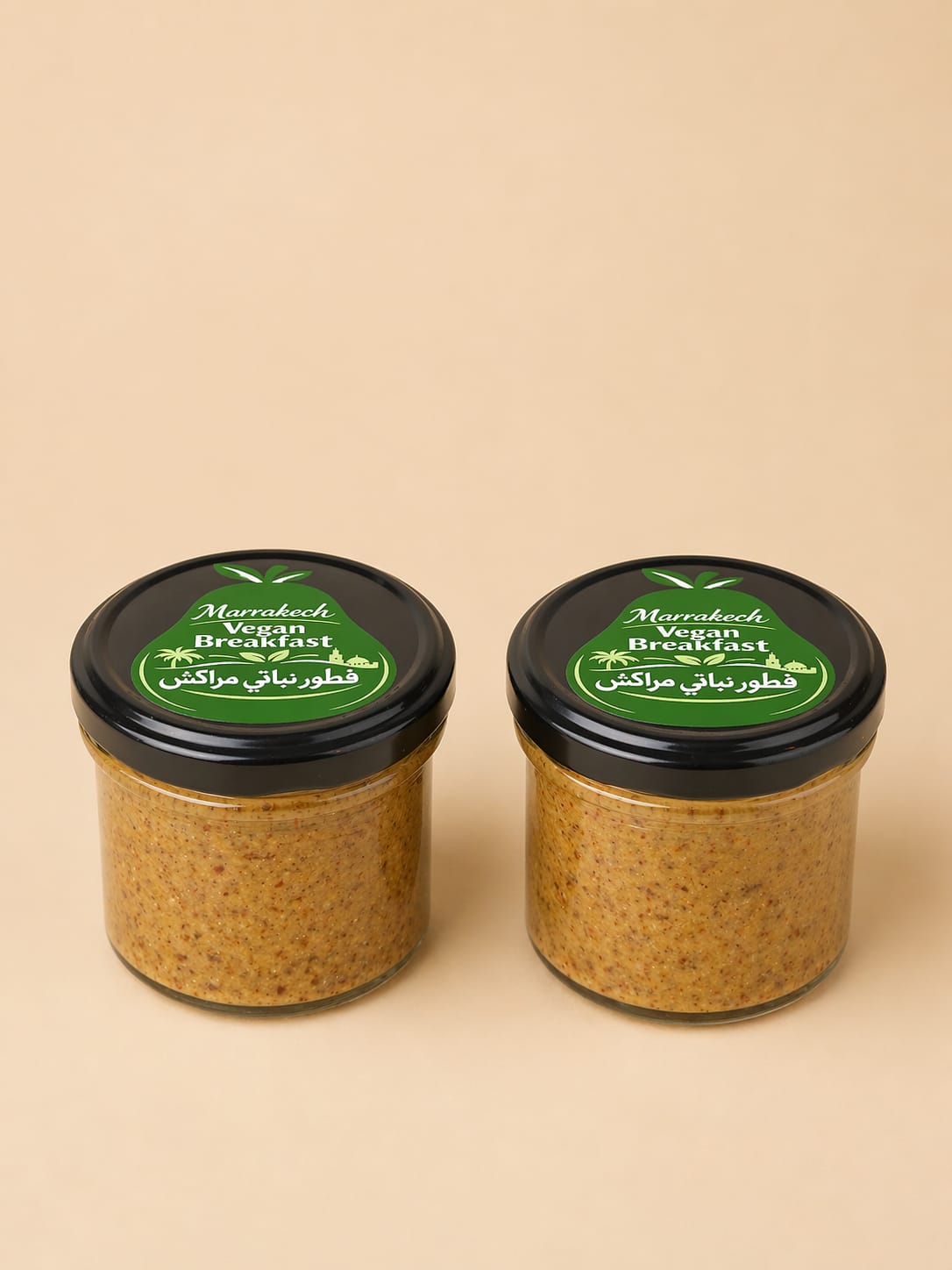
12. Amlou
A spread of roasted almonds, argan oil and a sweetener, eaten with bread or pancakes.
Vegan? Can be vegan. What to check: Many versions use honey. Ours is sweetened without honey.
What to drink
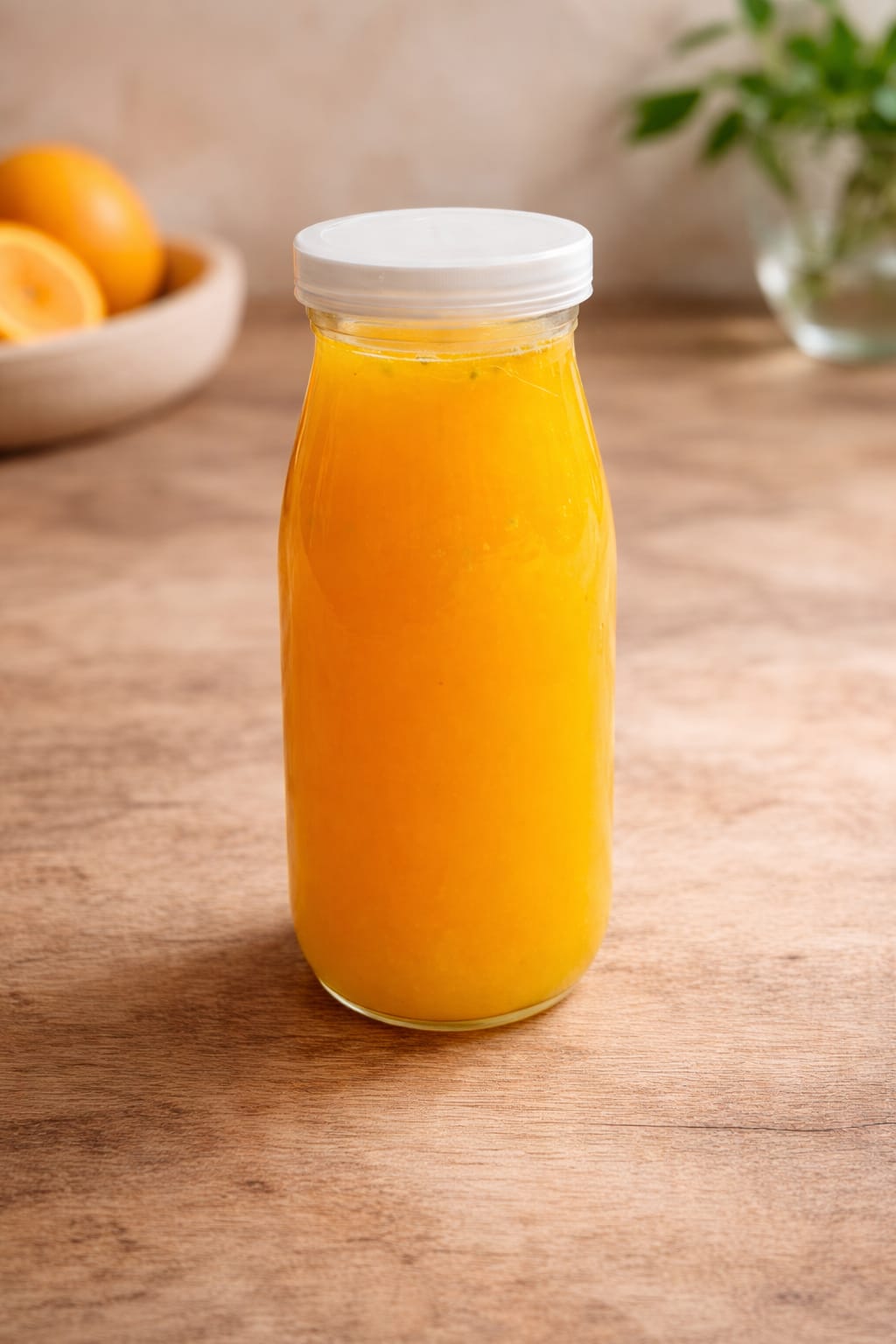
Mint tea (green tea, fresh mint and plenty of sugar) is always vegan. Fresh orange juice is squeezed on almost every corner and on Jemaa el-Fnaa; mixed juices at carts sometimes include milk or ice cream, so ask. Coffee is served with milk unless you ask for it black (noir or kahwa kahla); plant milks are mostly limited to newer cafés.
How to order safely
- Name ingredients, not labels. “No meat, no butter, no eggs, no honey, no cheese” is clearer than “vegan”.
- Ask how it was cooked. Couscous and soups carry stock even when no meat is visible.
- Choose dishes that are vegan by default — zaalouk, taktouka, lentils, bissara — when you cannot communicate easily.
- Mention allergies separately, since almonds, peanuts, sesame and wheat are common.
Try them without the questions
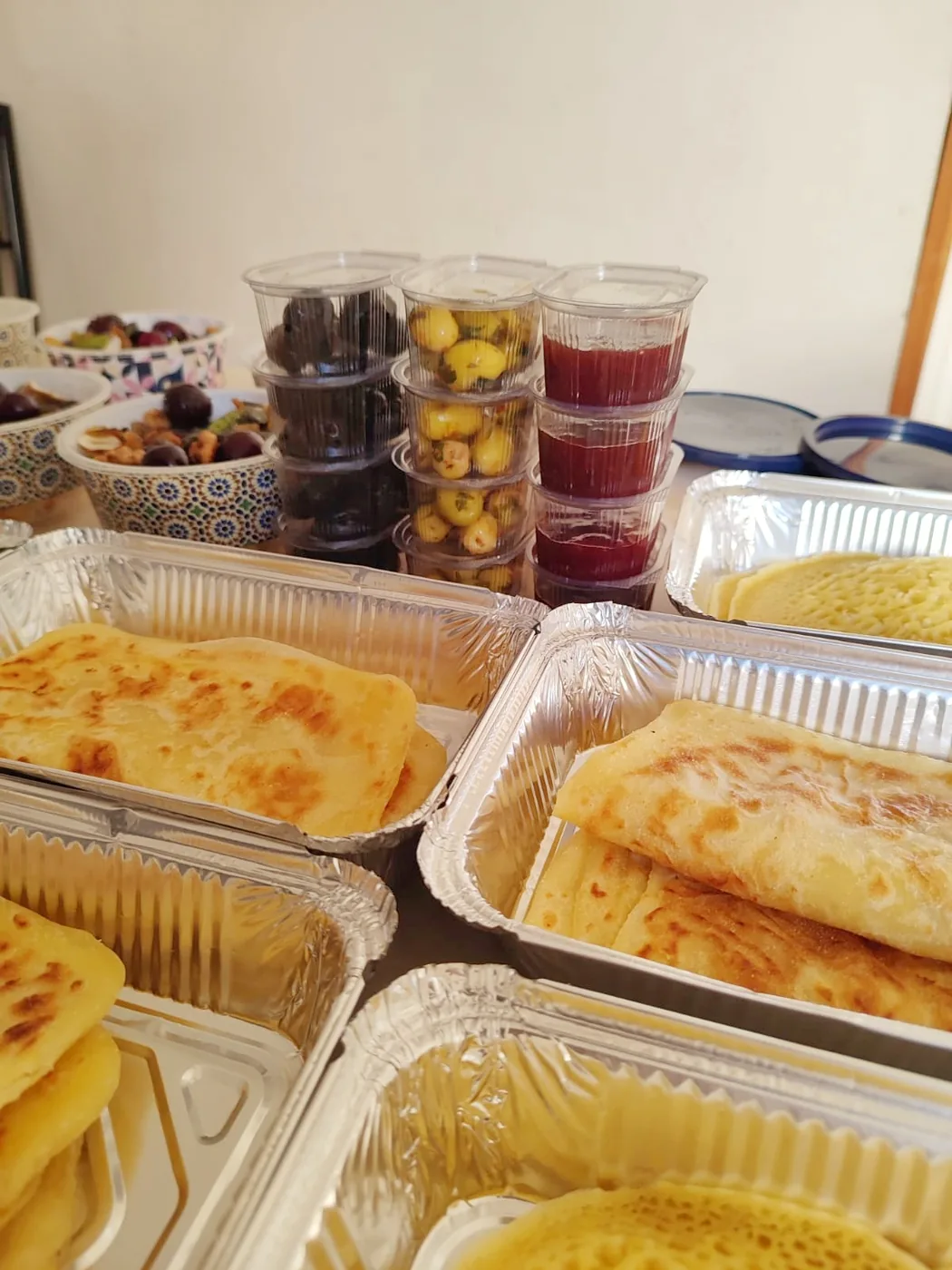
Several of these dishes — msemen, baghrir, amlou, zaalouk, taktouka, lentils and white bean stew — are on our breakfast menu, cooked 100% plant-based and delivered to your riad, hotel or apartment. You can order individual dishes or a pack through our ordering page. To learn how to make them at home, book our vegan Moroccan cooking class. For a practical overview of eating out, read our local’s guide to vegan food in Marrakech.
| Pack | Orange juices included | Price |
|---|---|---|
| Solo Pack | 1 | 135 MAD |
| Couple Pack | 2 | 270 MAD |
| Family Pack | 3 | 385 MAD |
| Premium Pack | 4 | 455 MAD |
Delivery is 25 MAD in the Medina and Gueliz and 100 MAD elsewhere in Marrakech, payment is cash on delivery, and slots run every 30 minutes from 08:30 to 16:00. Same-day orders are welcome for any slot at least one hour away. See every pack and dish on our breakfast menu.
Taste these dishes, fully plant-based
Order individual dishes or a breakfast pack. Same-day orders welcome for any slot at least one hour away.
Keep reading
- Vegan food in Marrakech: a local’s guide to what to eat
- Vegan breakfast in Marrakech: Moroccan dishes to start your day
- Where to have vegan food in Marrakech
- Best vegan restaurants in Marrakech
- Vegan food tours and cooking classes in Marrakech
- Traditional Moroccan vegan breakfast foods
Frequently asked questions
What can vegans eat in Marrakech?
Plenty. Bissara, zaalouk, taktouka, lentils, white bean stew, vegetable tagine, seven-vegetable couscous, olive-oil msemen, baghrir, bread, olives, amlou without honey, fresh orange juice and mint tea are all plant-based or easily made plant-based. The main things to check are smen (preserved butter), meat stock and honey.
Is Moroccan couscous vegan?
The grain itself is vegan, but couscous is usually steamed over a meat or chicken broth and often finished with smen. Vegetable couscous is only vegan when the cook confirms it was made with water or vegetable broth and olive oil.
Is harira soup vegan?
Usually not. Traditional harira often contains lamb or beef, is sometimes made with meat stock, and can be finished with egg. Plant-based versions exist, but you need to ask specifically.
Are Moroccan pastries vegan?
Most are not, because they are made with butter and soaked in honey, like chebakia. Sfenj (Moroccan doughnuts) are often made from just flour, yeast, water and oil, and dates, nuts and fresh fruit are the easiest sweet options.
Is Moroccan mint tea vegan?
Yes. It is green tea, fresh mint and sugar, served without milk.